

Schueberfouer 2026 in Luxembourg: Local Delicacies & Digestion
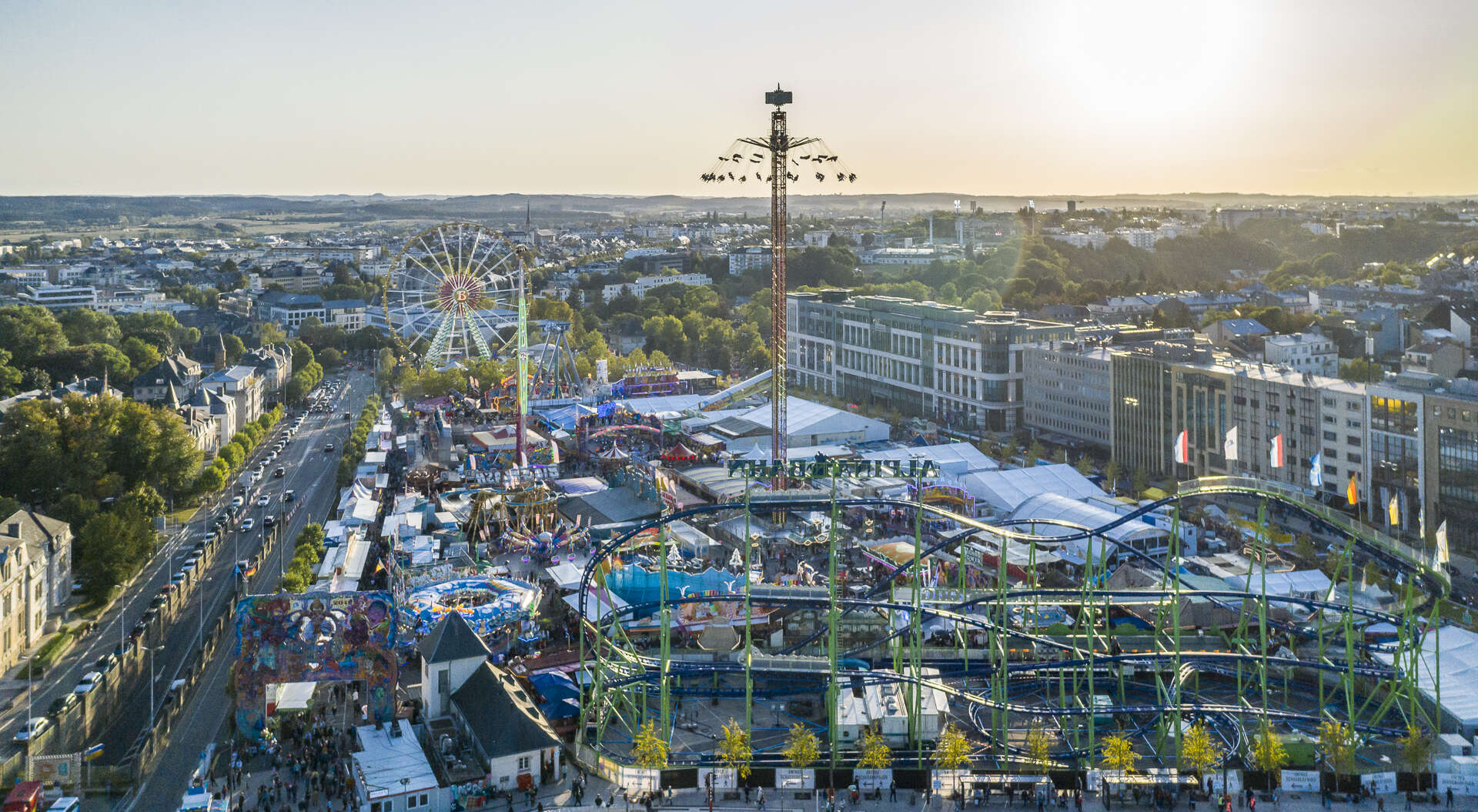
From August 21 to September 9, 2026, the Schueberfouer returns to the Champ du Glacis in Luxembourg City.
Nearly seven centuries of history, carousels, large banquet tables, aromas that whet the appetite… and a few Luxembourg specialties that would be a real shame to pass up.
Gromperekichelcher, Fouerfësch, Kniddelen, Wäinzossis… what are the must-try foods at the Schueberfouer?
And most importantly, how can you enjoy the festival without spending part of the night trying to digest it all afterward?
I’d like to take you on a brief journey through Luxembourg’s history and cuisine before returning to my role as a naturopath.
And stick with it until the end: you'll find the food combinations I'd avoid at La Fouer and my little natural digestive aid for stomachs that don't handle overindulgence as well as their owners do.
The Schueberfouer: A History Dating Back to 1340
The Schueberfouer has a long history.
It was founded in 1340 by John the Blind, Count of Luxembourg and King of Bohemia, as a major trade fair centered around the Feast of St. Bartholomew, celebrated on August 24.
Merchants, artisans, farmers, and local residents came there to trade.
Over the centuries, the fair has undergone a transformation. Commerce has gradually given way to entertainment, attractions, socializing… and, of course, fine dining.
Nearly seven centuries later, the Fouer continues to bring generations together.
And this continuity is quite extraordinary.
And why is the Schueberfouer held at the “Glacis”?
Even the name of the place tells the story of Luxembourg.
In military architecture, a glacis is a large open area in front of fortifications. It had to remain clear so that defenders could observe the approach of a potential enemy.
This detail takes on its full meaning when we remember that Luxembourg was, for centuries, one of Europe’s major strongholds—so much so that it was nicknamed the “Gibraltar of the North.”
After the Treaty of London in 1867 and the dismantling of much of the city's fortifications, the city began to change.
The Schueberfouer, on the other hand, had already traveled far and wide.
Originally located on the Plateau du Saint-Esprit, it was moved to Limpertsberg in the 17th century.
Then, in 1893, it found its current location: the Champ du Glacis.
More than 130 years later, we're still going back there.
I especially like this symbol:
A space once associated with the defense of the fortress has now become a vast venue for celebrations, gatherings, and socializing.
Now that we know what we're getting into…
Let's see what we're going to put on our plates!
What to Eat at the Schueberfouer? Luxembourg Specialties to Discover
If you’re going to treat yourself to a few delicacies, you might as well choose ones that truly reflect Luxembourg and La Fouer.
Gromperekichelcher — Must-Sees
There's no other way to start.
Gromperekichelcher are the famous Luxembourgish pancakes made from grated potatoes, usually prepared with onion, parsley, and egg, then fried until they’re deliciously crispy.
At the Schueberfouer, they're practically part of the scenery.
My advice: Choose a busy stand with a good turnover, and enjoy them fresh out of the oven and piping hot.
And think of them as the fried dish of the meal.
Gromperekichelcher + fries + fried fish doesn't necessarily mean three times as much fun for your digestive system…
Fouerfësch — the fish of the Fouer
This is a specialty that is closely associated with the Schueberfouer.
" Fouerfësch " traditionally refers to fried fish from the Fouer, historically whiting.
It is traditionally paired with a glass of dry white wine from the Luxembourg Moselle region.
If you really want to experience La Fouer, this is a tradition worth discovering.
Kiermeshâm — the fair ham
The Kiermeshâm, or fair ham, is also part of Luxembourg’s tradition of folk festivals.
Rich and quite salty, it naturally calls for a drink.
A Luxembourg beer, perhaps…
But don't forget the water!
Judd Mat Gaardebounen
One of the great classics of Luxembourg cuisine.
Judd mat Gaardebounen is a traditional dish that combines smoked pork neck with fava beans.
Rustic, hearty, and nourishing.
Not exactly a “detox” lunch…
But we're at the Schueberfouer!
Bouneschlupp
Bouneschlupp is a traditional Luxembourgish soup made with green beans, usually served with potatoes and, depending on the recipe, bacon or sausage.
A lovely way to discover a more down-to-earth side of the country's cuisine.
Kniddelen mat Speck—what on earth is that?
The name deserves an explanation.
Kniddelen are small Luxembourgish dumplings, traditionally made with flour and then poached in water.
In the Speck matte version, they are served with bacon bits.
Soft, hearty, and incredibly comforting:
Think of them as a full meal rather than just a side dish.
Wäinzossis
Wäinzossis are wine sausages found in Luxembourg cuisine.
Definitely worth trying if you want to get a taste of the local vibe rather than settling for the same hot dog you’d find at any carnival.
Paschtéit
Paschtéit is the Luxembourgish equivalent of a "bouchée à la reine": a puff pastry shell filled with a creamy meat-based filling.
Once again, this is hearty cuisine.
And this is exactly where my profession starts to take over…
How can you enjoy the Schueberfouer without getting an upset stomach?
Don't worry.
I wouldn't recommend bringing your salad to the Champ du Glacis.
Being healthy doesn't mean eating perfectly 365 days a year.
A balanced diet should also make room for culture, traditions, shared meals, and enjoyment.
But a few simple habits can make a big difference to how the evening ends.
1. Don't show up starving
Fasting all day “because tonight is La Fouer” is rarely a good strategy.
Above all, you run the risk of eating too much, too quickly.
Come with a normal appetite.
2. Chew thoroughly
The advice seems almost too simple.
However, digestion begins in the mouth.
Eating slowly also gives the body time to receive signals of fullness.
So sit down, chat, and enjoy.
3. Choose your pleasures instead of adding them up
Do you really want some Gromperekichelcher?
Take them.
And really enjoy it.
Then take a walk, check out the booths, and wait a bit before deciding if you really want something else.
The problem is rarely the occasional treat.
It's much more often the accumulation.
4. Think about water
Especially if beer, crémant, or Moselle wine are part of your evening.
Alcohol + heat + walking + salty foods can quickly lead to thirst, discomfort, and headaches.
A very simple rule:
Top off the water regularly in the evening.
5. Take a walk after eating
And for once, there's no need to plan your after-dinner stroll.
You've come to exactly the right place for that.
My little "Fouer Special" natural digestive kit
Of course, there’s no need to show up at the Glacis with a first-aid kit in your bag.
However, some plants traditionally used to promote digestive comfort may be helpful on an occasional basis.
Ginger
It can be helpful when heavy meals easily lead to nausea or a feeling of heaviness in the stomach.
Fennel
Particularly helpful when digestive issues mainly manifest as bloating and gas.
Lemon balm
A good option when stress and digestive discomfort tend to go hand in hand.
The Artichoke
Traditionally used to aid digestion, especially after heavy meals.
However, it is not suitable for all situations and requires special precautions, particularly in cases of certain disorders or obstructions of the bile ducts.
Peppermint
It may help promote digestive comfort in some people.
However, it is not necessarily a good idea if you have gastroesophageal reflux disease, as it can make the condition worse.
What about dietary supplements?
Digestive enzymes
Digestive enzymes may be beneficial for certain individuals with identified digestive difficulties.
They are generally taken at the beginning of a meal, depending on their ingredients and the recommendations provided with the product.
When these products are in the form of capsules or tablets intended to be swallowed whole, do not open, crush, or chew them, unless the manufacturer explicitly states otherwise.
Some formulations are, in fact, designed to release their active ingredients at a specific location in the digestive system.
And remember:
Digestive enzymes don't give you a free pass to eat twice as much!
Betaine HCl
Here, caution is even more important.
Betaine HCl should be taken in a form intended to be swallowed whole—such as a capsule or tablet —and with a meal, in accordance with the product’s recommendations and the individual’s specific circumstances.
Do not open a betaine HCl capsule, do not chew it, and never pour its contents directly into your mouth or onto food.
Its acidic nature can irritate the mucous membranes of the mouth, throat, and esophagus.
And most importantly: betaine HCl is not a supplement you should take on a whim just because you’re planning to have a large meal.
It is not suitable for everyone and requires special caution, particularly in cases of acid reflux, gastritis, ulcers, or certain medications.
The right supplement, in the right form, at the right time… and only when it’s truly necessary.
❌ Groups I’d Avoid at the Schueberfouer
An important little clarification.
I'm not talking about "food incompatibilities" here.
Our digestive system is perfectly capable of handling a meal that includes proteins, carbohydrates, and fats.
At the Schueberfouer, the main problem is overcrowding.
So I would avoid:
- Gromperekichelcher + French fries + fried Fouerfësch all in the same meal;
- a particularly fatty meal immediately followed by a very fatty and very sweet dessert;
- several alcoholic beverages without water;
- alcohol + very sugary drinks + particularly salty meals;
- several consecutive courses even though you're already full;
- to eat very quickly just because everything smells so good.
And there's one organization we absolutely have to talk about…
A big meal + a ride that spins you around in every direction
No.
Your stomach has many benefits.
Digestive discomfort is not one of them.
A leisurely walk after dinner? What a great idea.
The liveliest attraction at the Schueberfouer right after the Gromperekichelcher, the Fouerfësch, and a beer?
Instead, give your digestion a little time.
So, what would my ideal evening at the Schueberfouer be like?
Come with a normal appetite.
Start by taking a look around.
Look. Smell. Choose.
Then try the Luxembourg specialty that really tempts you.
Take the time to savor it.
Drink some water.
Walk.
Let's discuss.
Enjoy the attractions.
And if, a little later on, you’re in the mood for something sweet, choose the one that really makes you happy, rather than nibbling on four different desserts.
Choosing what you enjoy doesn't take anything away from the celebration.
On the contrary: we appreciate them even more.
❤️ Good health is also built on good times
Health isn't determined by a single meal.
It is built into our daily routines, repeated week after week, month after month, and year after year.
A balanced diet should leave roomfor traditions, shared meals, memories, bursts of laughter…and Gromperekichelcher.
From August 21 to September 9, 2026, come enjoy the Schueberfouer and the Champ du Glacis, a site steeped in centuries of history.
Find out more.
Give it a try.
Share.
Walk.
Laugh.
And perhaps from now on you’ll look at the Glacis a little differently, remembering that before the lights, the rides, and the smell of French fries, this place told a completely different story about Luxembourg.
Nearly seven centuries after its founding, the Schueberfouer continues to bring generations together.
And that, too, contributes to our well-being.
Frequently Asked Questions About the 2026 Schueberfouer
When will the 2026 Schueberfouer take place?
The 2026 Schueberfouer will take place from Friday, August 21, to Wednesday, September 9, 2026, at the Champ du Glacis in Luxembourg City.
Where is the Schueberfouer held?
The Schueberfouer takes place at the Champ du Glacis in Luxembourg City, where it has been held since 1893.
What Luxembourg specialties should you try at the Schueberfouer?
Gromperekichelcher and Fouerfësch are particularly associated with the Fouer. It’s also a great opportunity to try Kniddelen, Wäinzossis, Judd mat Gaardebounen, Bouneschlupp, or Paschtéit.
How can you improve digestion after a heavy meal?
Start with the simplest things: eat slowly, chew thoroughly, avoid eating too many fried foods at once, drink enough water, limit your alcohol intake, and take a leisurely walk after meals.
Certain plants traditionally used to support digestive comfort may also be beneficial depending on your situation.
What if digestive problems occur regularly?
Bloating, a feeling of heaviness after meals, acid reflux, irregular bowel movements, or recurring digestive discomfort warrant further consideration.
When these episodes become a regular occurrence, the goal is no longer simply to find something “to help with digestion.”
It's worth figuring out why your digestive system reacts this way.
At my practice in Luxembourg, my approach involves reviewing your medical history, dietary habits, and overall constitution—and, when relevant, your biological and microbiological test results—to identify the various factors that may be contributing to your imbalances.
Understand, connect the information, and then tailor the support.
Have fun at the Schueberfouer!
Have a great Schueberfouer, everyone!
Have fun at the Schueberfouer!
Have a wonderful time at the Schueberfouer!
Have fun at the Schueberfouer!
Have fun at the Schueberfouer!
Enjoy. Indulge. And take care of yourself.